

Tell us how you found the collection in 2022 and what happened to it before Horbatov donated it to the state.
In April 2022, the Prosecutor Generalʼs Office registered criminal proceedings on the facts of collaboration activities, overthrow of the constitutional order, etc. As part of the pre-trial investigation, the activities of many individuals were checked, not only Horbatov.
In June, the SBI investigators and I came to search the office in Kyiv, which belonged to Horbatov’s wife through a “Cypriot” company. We found the collection by accident, we didn’t know about its existence. Horbatov kept the artifacts in plastic boxes in the office, in the electrical panel room and the basement.
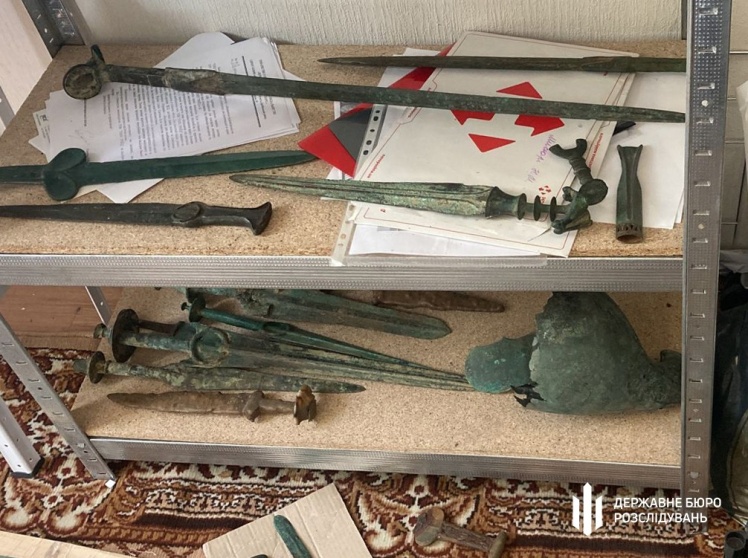
I went there and saw several dozen swords piled up in a pile. Some of them looked like Scandinavian and Scythian, others I couldn’t attribute. We turned to specialists from the Museum of the History of Ukraine to help us attribute everything.
Prosecutor of the Prosecutor Generalʼs Office Serhiy Chaplyan found Valerii Horbatovʼs collection in the electrical switchboard in June 2022.
The search lasted five days, we sent two trucks to the museum — a total of 6000 artifacts. But as it turned out, that was not all. We returned there a year later, and found another thousand objects, and loaded another truck. We found a Hun sword decorated with gold straps and almandines, a Byzantine gold icon, coins and Iranian helmets.
After the first search, an exhibition of the found artifacts was held at the History Museum. I ordered art expert examinations to determine whether these objects are archaeology, what their cultural value and possible value are.
In three years, we managed to attribute 30 percent of the collection. Most of these are rare artifacts, there are many unique ones that have no analogues in museum collections in Ukraine. But we also found several fakes.
Until the spring of 2025, Horbatov did not contact the investigation. Then his lawyer wrote an appeal to the State Bureau of Investigation, stating that he denied any involvement in collaborative activities, and that he had inherited part of the collection from his grandfather.
I met with the lawyer and said that we plan to complete the examinations no earlier than 2030, or maybe later. Horbatov offered to transfer the collection to the state, and we concluded an agreement.
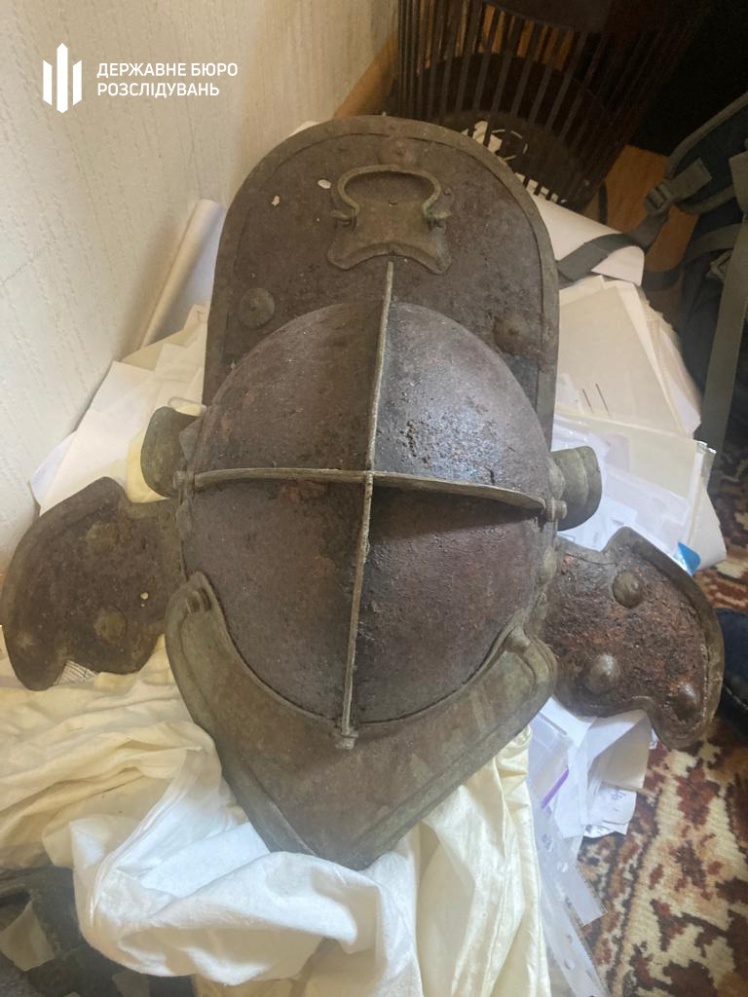
He handed over everything he had to the state — almost 8000 items, that is, not only what we found during the searches. For example, a gilded Old Russian helmet. There are no such items in museums in Ukraine.
Those that were found earlier in the Chernihiv region were taken to Moscow. This is a sensation for Ukraine. The only thing is, the helmet is in very poor condition and someone needs to finance its restoration.
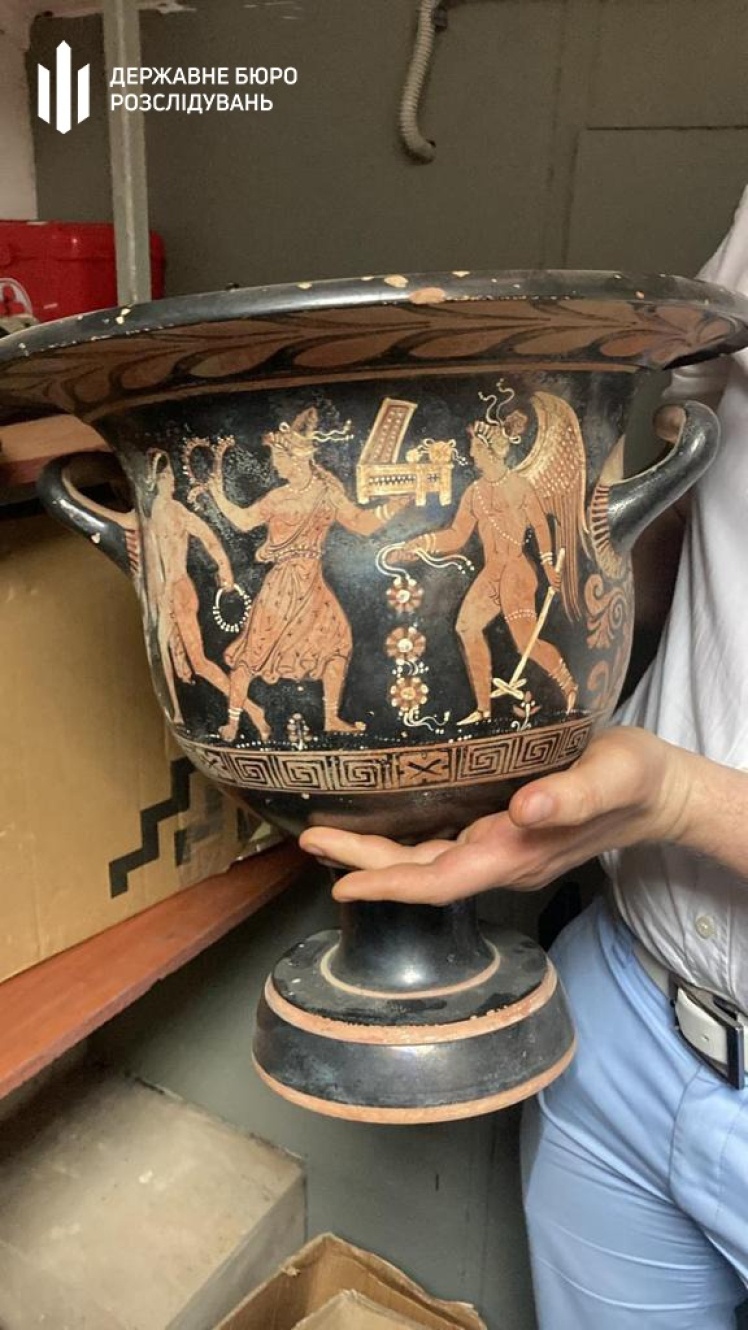
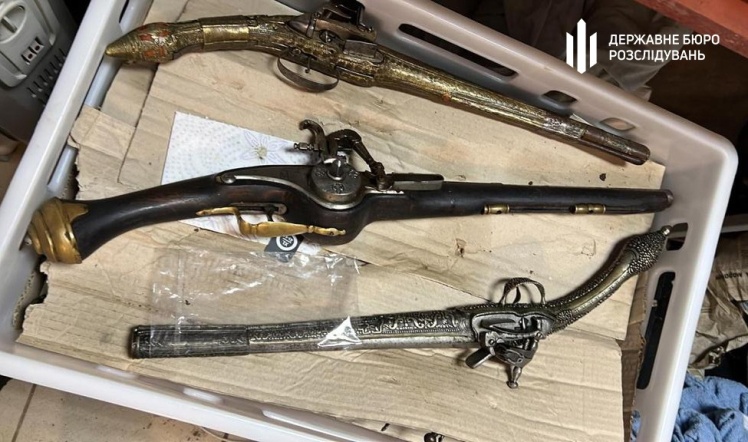
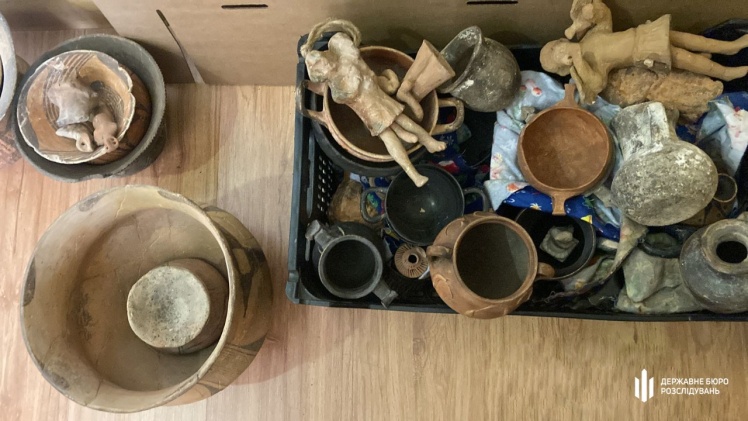
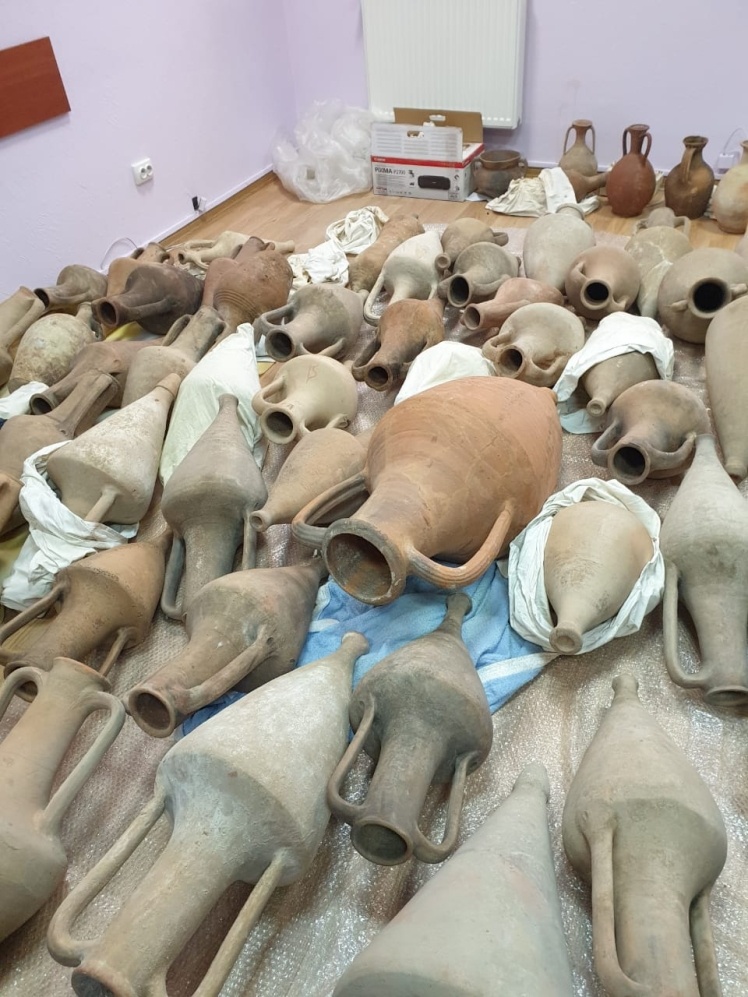
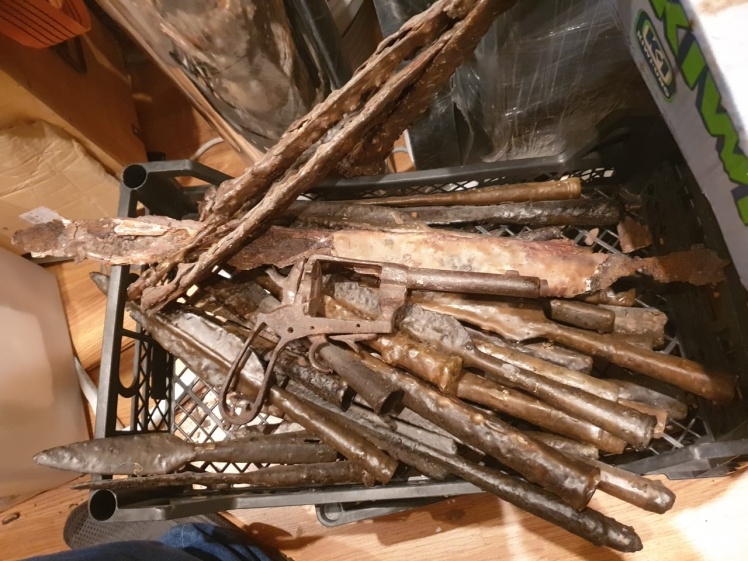
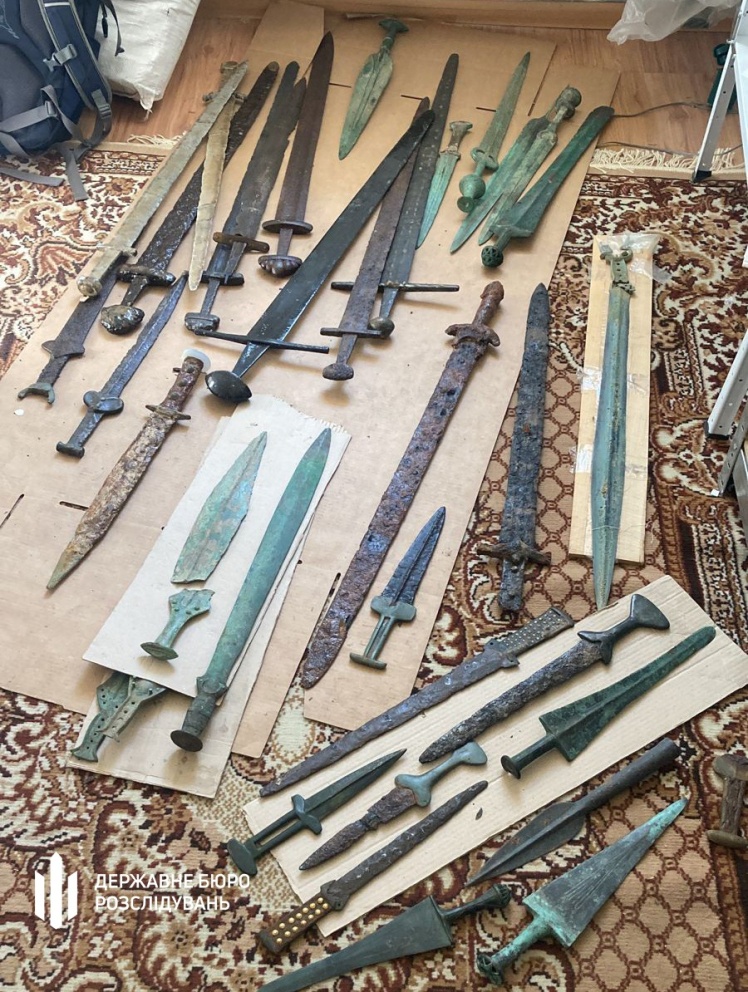
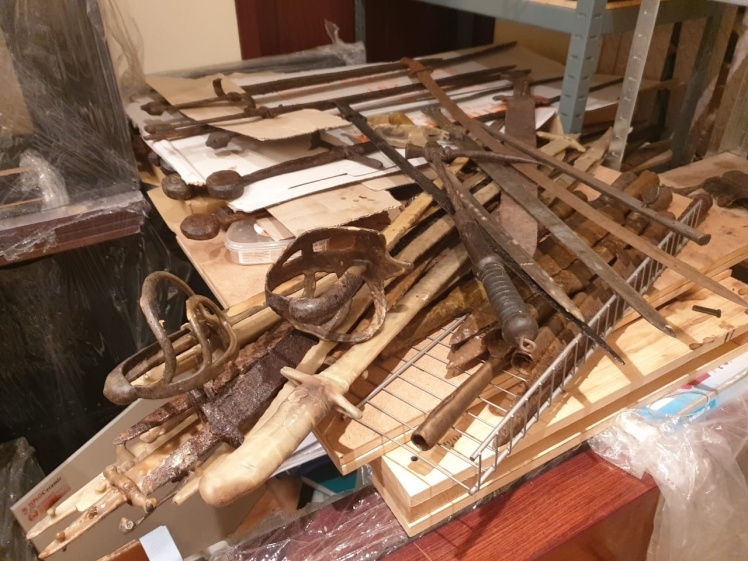
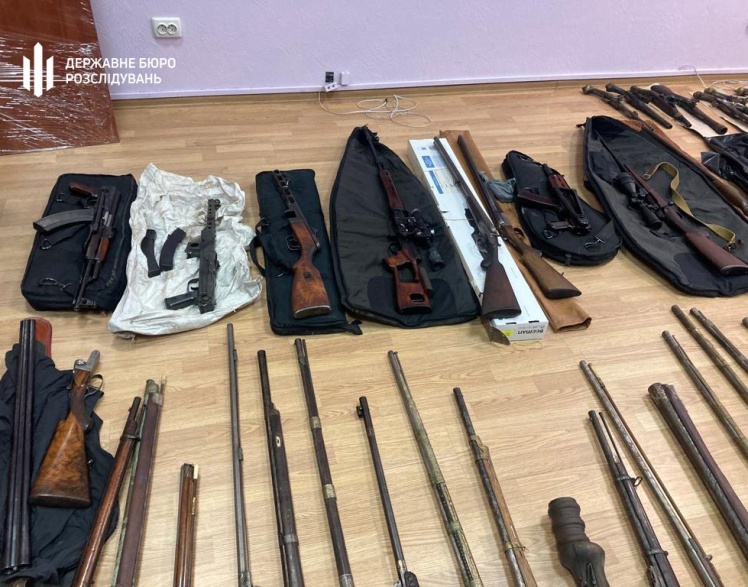
National Museum of History of Ukraine / «Babel’»
What is the agreement with Horbatov about?
The agreement concerns articles 198 and 263 of the Criminal Code — illegal possession of archaeology and firearms. He was found with an ancient, highly artistic weapon, as well as a modern one with erased license plates.
As for archeology, we identified five items in his collection that he purchased through proxies at the Violet auction, and they are black archeology. Among these items is a sword that is about three thousand years old, it is from the Bronze Age, Gava-Holigrad culture. A unique artifact for Ukraine and — I suppose — for the world.
Horbatov purchased it through his employee for UAH 101 000 — the average cost of such an artifact on the black market. In Europe, such a thing with provenance can be sold for two to three times more. Violet is a platform where people trade archeology and antiquities. Now they have started to monitor whether there are any obvious signs of illegal origin of archaeological finds, before there was nothing like this.
Horbatov admitted that he had kept these things. A trial was held, and the verdict stated that he was handing over the collection to the state. He was sentenced to three years in prison with a one-year probationary period and was given a suspended sentence.


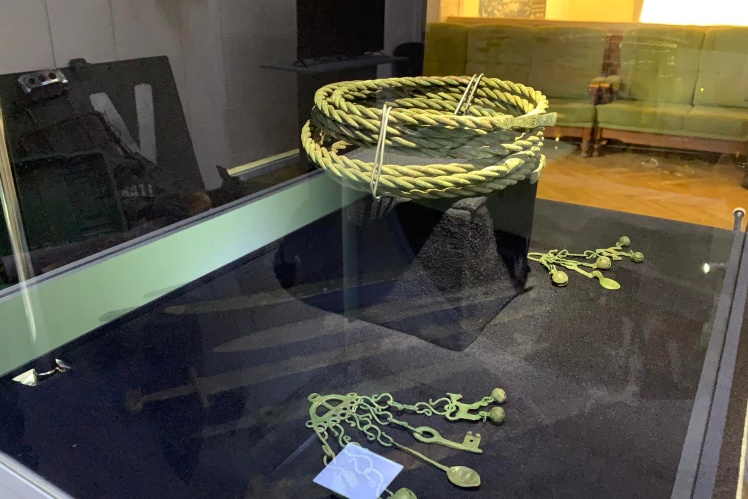
250 Scythian swords — akinaks — were found in Horbatov's estate. There are only 100 of them in the Museum of the History of Ukraine, and it is questionable whether 250 will be collected in all Ukrainian museums. Antique helmets of the 6th–4th centuries BC. These were worn by the heroes of Homerʼs "Iliad". A necklace and pendants for clothes from a burial ground near Bila Tserkva in the Kyiv region, which was looted by black archaeologists after 2010. The burial ground belonged to the Baltic tribes. The necklace consists of eight rows of metal braid, the ends decorated with embossing.
National Museum of History of Ukraine / «Babel’»
In 2022, SBI stated that Horbatov paid taxes in the so-called "DPR" and occupied Crimea, withdrew money to Russia, and was involved in the overthrow of the constitutional order. Does the collection agreement nullify these charges?
This line of investigation has come to a dead end. Horbatov denies the charges. His position is that he had connections in Crimea, as he lived there and had a wide circle of contacts.
He knows [the self-proclaimed Prime Minister of annexed Crimea Serhiy] Aksyonov, but they have not communicated since 2014. At the moment, the investigation has no reason to suspect Horbatov of the facts you have listed.
Iryna Venedyktova, who headed the Prosecutor Generalʼs Office in 2022, stated that documents were found in Horbatovʼs possession that confirmed the accusations of collaboration. Were these premature statements?
The documents found in his office are almost all from the period before 2014. Some are from after, but they are related to the need to provide advice to businesses that remained in the occupied territory.
From the outside, it looks like this: a person owns a business and real estate in Crimea, 2014 comes and, of course, he is trying to sell the property or at least hold it in order to sell it over time. Many people have real estate in the occupied territories.
Some law enforcement officers believe that if you sell a house in the occupied territories under the legislation of the occupation authorities, then you support them, and this is high treason. But each case has its own characteristics and must be assessed individually.
After 2014, Horbatov developed his business more in the Zhytomyr region, where he owns several agricultural enterprises.
Where is Horbatov now?
He is in hospital in Cyprus, has undergone heart surgery and is awaiting another surgery. In my opinion, his health is one of the reasons why he decided to dispose of the collection in this way. He is seriously ill, but if his health improves, he wants to return to Ukraine.
Horbatov went abroad after the invasion. He is not the only one who wants to return. I have other criminal cases where suspects are looking for opportunities to return to Ukraine from abroad.
Valerii Horbatov was elected as an MP three times, was the representative of the President of Ukraine in Crimea, the Prime Minister of Crimea, and spent his entire life developing a collection of antiquities that he inherited from his grandfather.
Верховна Рада Автономної Республіки Крим
2.
Letʼs get back to the collection. When Babel wrote about the 6000 artifacts found at Horbatovʼs in June 2022, archaeologists and journalists from Crimea were surprised — they knew him as a collector of Crimean sanatoriums and land, and not an appreciator of archeology. Did the investigation establish how he assembled the collection?
Horbatov claims that part of the collection was inherited from his grandfather, and some he collected himself. His grandfather inherited the artifacts from a landowner he worked with. He did not provide documents that something was inherited from him, but we did not evaluate this information. He voiced his version, admitted that he had several items of black archaeology and made a deal with the investigation.
Horbatov was also given artifacts, and he bought them. He had a close friend Yevhen Turovsky, an archaeologist from the Tavrian Chersonese reserve, who died in 2022. They co-authored the book “Ancient Weapons and Armor. Part I. The Copper Age” and the catalog “Coins of Ancient and Medieval Chersonese”.
You can find a lot of ambiguous information about Turovsky. Unlike black diggers who run around with a metal detector, he had an official permit for excavations. But he supposedly sold the most valuable artifacts to private collections, and only a small fraction ended up in the reserve.
We have no way to verify this, because Crimea is occupied.
Horbatov was not a black archaeologist, but he bought things found by black archaeologists. The bronze sword he bought for UAH 101 000 on "Violita" led us to a person who uses a metal detector to search for archaeology. Such people call themselves diggers.
This person found a treasure in Transcarpathia — nine bronze swords that are 3000 years old, and sold them on "Violita". Now the History Museum has two swords from this treasure. We found them in various criminal cases. Imagine if the museum collected all nine swords, it would be fantastic.
In 2022, Prosecutor General Iryna Venedyktova stated that some of the items in Horbatovʼs collection were "likely stolen from Crimean museums". Has this been confirmed?
The collection includes a book in French, "Christian Sarcophagi of Gaul", printed in Paris in 1886, with an unexpired seal of the "Taurian Chersonese" reserve. Horbatov said during interrogation that someone had given it to him, perhaps Turovsky. This is the only thing connected with the museum.


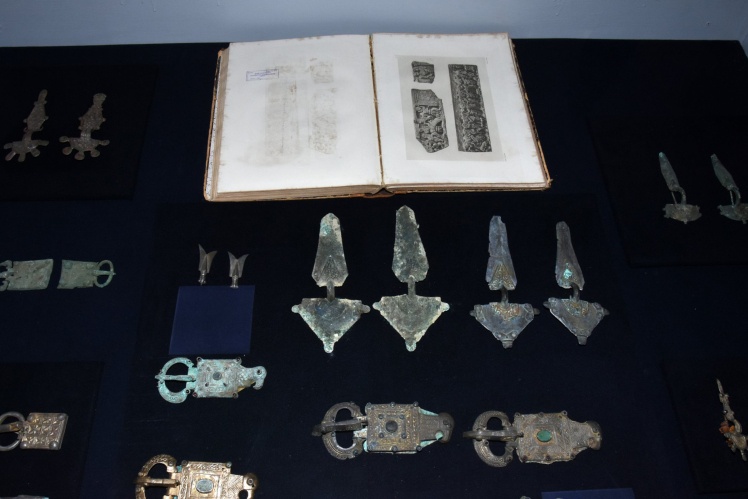
Gothic decoration with a birdʼs head. Gothic jewelry from Crimea, inlaid with blue stones. An old book "Christian Sarcophagi of Gaul", printed in Paris in 1886. Inside is a seal with the inscription "City of Sevastopol, Library of the "Taurian Chersonese" Reserve."
National Museum of History of Ukraine / «Babel’»
It was assumed that Horbatovʼs office was a transit point for black archaeologists, and Horbatov traded in things.
There is no evidence in favor of this. Horbatov did not trade, itʼs 99.9%. He bought, and there are certain items that were given to him.
Why did Horbatov store artifacts in plastic boxes in the electrical panel room and in the basement?
This was his premises, after leaving Crimea he put together a collection there. During interrogation he said that he wanted to create a private museum. People who worked with him in the office confirm that he wanted a museum named after himself.
They said that Horbatov was a rather harsh and cold person, but when it came to archaeology, he changed before our eyes and could talk about history for hours. Every artifact was like a child to him. He lived by it.
But he kept the collection in rooms where the temperature and humidity regime were not maintained. Some of the things fell apart in his hands during the search.
It was a completely amateur story. Horbatov tried to preserve something — he filled it with wax, but it only did harm.


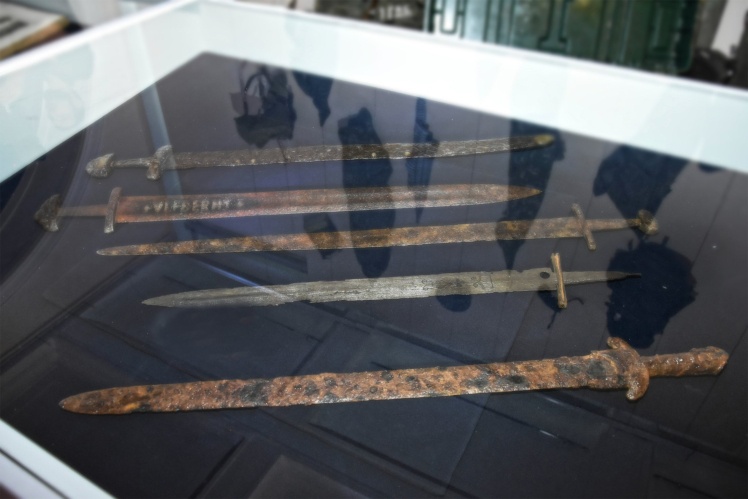
Viking sword, 11th century. On the blade is the engraving of the Ulfberht workshop. Bronze sword, circa 8th century. The blade is inlaid with floral patterns — a status item. No Ukrainian museum had a Byzantine sword in its collection until one was found in Horbatovʼs collection. From bottom to top: a Byzantine sword, a painted sword, three Varangian swords.
National Museum of History of Ukraine / «Babel’»
What is the value of the collection?
Part of the coin collection was valued at almost UAH 8 million. The entire coin collection will be worth about UAH 15 million. And in general, the collection will cost several million dollars. But we don’t have a legal market, so when making an assessment, experts focus on the black market or foreign auctions.
As a result, a chain mail from the 3rd-5th centuries AD was valued at UAH 103 000, although there are no such in our museums. An antique wine vessel, of which there are many, was valued at a million. The experts had nothing to base their assessment on when they assessed the chain mail.
Did Horbatov collect "Scythian gold"?
He assures that he did not collect it. Of the gold products seized from him, a Hun sword with gold straps and almandines, several gold overlays and a gold icon were described. But the catalog that Horbatov published together with Turovsky describes gold coins. Experts say that there are no such coins in Ukrainian museums.
If Gorbatov attributed them, then he had access to them, then where are they? There is no answer, because it was not possible to fully communicate with him.


A Hun sword decorated with gold belts and almandines. Byzantine golden icon depicting the Archangel Michael, 11th–12th centuries.
National Museum of History of Ukraine / «Babel’»
Horbatov told what items from the collection he inherited from his grandfather, and what did he collect?
This did not happen. We spoke once before the agreement was made and the second time during the trial. When this happened, he was under IV drips and physically could not give answers about all the items.
I am now asking the lawyer to at least tell the experts where the gilded ancient Russian helmet came from. Now Horbatov is after heart surgery, so we are waiting.
In addition to archaeology, there are a lot of items that he could have purchased completely legally. Archaeology and antiques are different things. He has a huge amount of antiques, which are no less valuable in terms of their state of preservation.
For example, fantastic helmets from the 17th-18th centuries, an Austro-Hungarian cuirass, Persian chain mail, and beautiful weapons from the Ottoman Empire.
If the case with the collection had gone to court, then archaeology is undoubtedly state property, but he would have returned the antiques, and these things have enormous historical value. Historians say that conventionally, things before the 18th century are archaeology, and after that — antiques.
The value of Horbatovʼs collection is difficult to overestimate. It is the largest private collection donated to the state.
So it was important that Horbatov voluntarily handed over the artifacts?
So that no one comes and says: “My grandfather collected this, and I want to return it.”
Now we have a private collector who has besieged the History Museum and is demanding to return the archaeology that is stored as material evidence. These are unique items from the Roman Empire period found in Ukraine. An investigation is currently underway in this case, and I think we will all hear about it.
The legislation states that archaeological heritage belongs to the state, why canʼt it be returned?
If you have not proven that you acquired the artifacts legally, then the ownership of them belongs to the state. But the problem is another — there is no mechanism for transferring them to the state unless it is a criminal offense.
In Ukraine, for many years, there has been not even a black market, but a wild market for archaeology. People run around with metal detectors and deny that they are engaged in illegal activities. When someone tries to stop the wild market, the diggers begin to resent the stateʼs interference in their earnings. They say: "Someone is going for mushrooms, and we are going for archaeology."
Diggers believe that excavations are prohibited only on officially registered monuments. But the legislation protects objects listed in the State Register of Immovable Monuments and those that are not tied to the registers.
Archaeologists constantly find cultural layers, and it can take years for a site to be listed. This does not give the right to plunder it. The legislation has flaws because it allows people to interpret it differently.


Horbatov had 6000 coins in his collection, from antiquity to the late Middle Ages. Coins of the Greek city of Panticapaeum, which was the capital of the Bosporan Kingdom. Coins of Princely Rusʼ, 11th-14th centuries.
National Museum of History of Ukraine / «Babel’»
Maybe the problem is not the legislation, but the fact that law enforcement agencies are not doing their job?
The problem is complex. Here is an example: in Kyiv, a man was caught red-handed smuggling “Scythian gold” — perfume bottles and pendants. They conducted searches and found archaeology — Trypillia figurines. The court in Kyiv ruled to confiscate the contraband item and return everything else to the owner, because it is not the subject of a criminal offense.
The man was returned the "Trypillia", and the "Scythian gold" lay in bags in the volumes of the case. It got to the National Museum of History of Ukraine only a year later, when they learned about the verdict and wrote an appeal to the Prosecutor Generalʼs Office.
Will the state fight for "Trypillia"?
It doesnʼt make sense anymore. If the things were returned to the owner, you wonʼt find them. When the searches at Horbatovʼs were not yet over, and journalists wrote about the found valuables, although they didnʼt have reliable information, I realized that publicity has a positive side.
If information gets out, it canʼt be hidden.
Horbatov at the opening of the Moscow Patriarchate temple in the village of Nechayne, Mykolaiv region, August 2014.
Миколаївська районна державна адміністрація